Our projects

Conservation, restoration, replication and fabrication on listed buildings, public monuments and museum collections across the UK, delivered for main contractors, local authorities, universities and museums.

Category

Investigations

We carry out investigation works on a client's behalf to support decision making about the conservation of historic materials. Using in house expertise and specialist sub-contractors we undertake exploratory works to better understand structures, sample materials, analyse paint layers, carry out trial cleaning techniques, and undertake historical investigation and research.

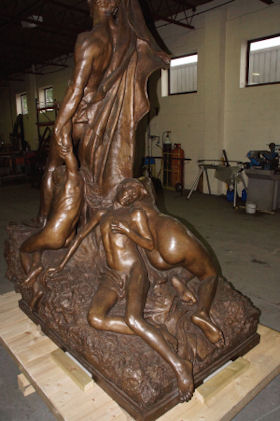
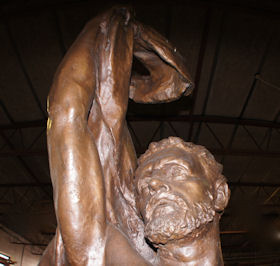
The bronze statue 'Adrift' returned to its plinth in Manchester
Detail of the 'Adrift' bronze during cleaning and waxing at the workshop

Investigations

'Adrift' by John Cassidy, Manchester

'Adrift' is a bronze statue by John Cassidy, made in 1907 and first exhibited at the New Gallery in London. It depicts a family clinging to a life raft in a stormy sea, the central figure a half-naked man holding a sheet up with his right hand, calling for help. It was purchased by James Gresham, a wealthy local engineer, who offered it as a gift to Manchester City Council. Originally intended for a municipal art gallery in Piccadilly that was never built, it stood in a sunken garden on the same site, was moved in 1953, went into storage in 2002, and returned to public display in St Peter's Square in March 2009.

In 2011 the statue was taken into storage again to allow for the refurbishment of the Manchester Town Hall Extension and City Library. Heritage Project Contracts was employed to carefully remove the statue, pack it and transfer it to our workshop for safe storage. In 2014 it was unpacked and given a gentle clean before the application of a coat of protective wax. With the works to the Manchester Library buildings completed, we returned the statue to its plinth in the centre of Manchester at the beginning of 2015.

Works completed
January 2015
Main contractor
Laing O'Rourke
Investigations

Manchester Central Convention Complex

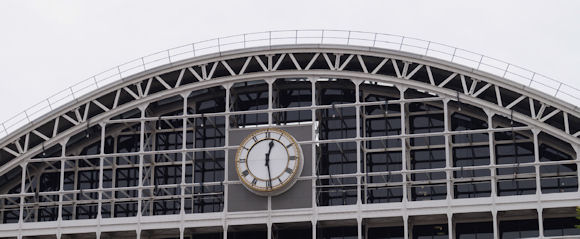
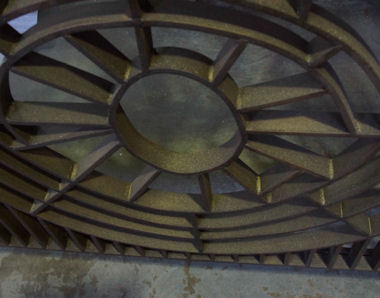
Manchester Central Convention Complex was originally Manchester Central railway station, converted to its present use in 1982 when it was known as the G-MEX Centre. The building was designed by Sir John Fowler as the northern terminus for rail services from St Pancras, London, and opened in 1880. It was listed Grade II* in 1963 and has one of the largest unsupported single-span wrought iron arches in Britain, spanning 64 metres.

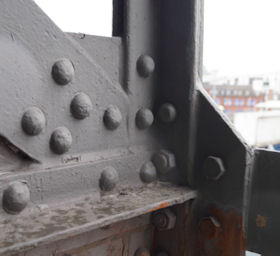
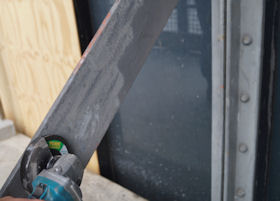
Heritage Project Contracts was invited to carry out trial cleaning works to the wrought iron lattice pieces at the front and rear of the building. The existing paint finish was beginning to fail and an efficient technique was required to remove the loose paint layers back to a sound surface. We trialled several methods, including local blasting and power tools fitted with abrasive pads, leaving the ironwork ready for re-finishing with a suitable paint system.

Works completed
July 2013
Main contractor
G-MEX Team
The wrought iron arched roof of Manchester Central Convention Complex
Trial cleaning to a wrought iron lattice panel
Loose paint layers removed from ironwork back to a sound surface
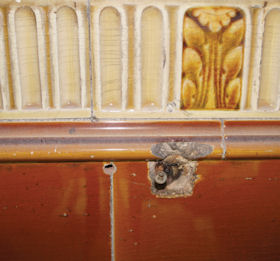
Glazed tiles in the Egyptian Room at Oldham Town Hall
Trial cleaning of the surviving glazed tiles
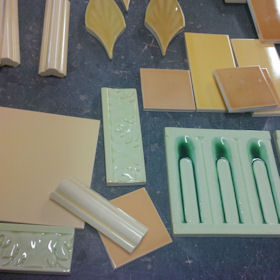
Sample replica tiles produced for approval

Investigations

Egyptian Room, Oldham Town Hall

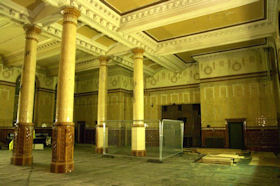
The centre of Oldham has been undergoing a programme of refurbishment and redevelopment. As part of these works the Town Hall buildings were part renovated and their use changed to a multiplex cinema, coffee shops and restaurants. The Egyptian Room formed the last phase of development of the original buildings, having been built in 1917. Its interior is decorated with glazed tiles giving the room its Egyptian look; it was originally the Council Rates office.

Heritage Project Contracts was appointed by Morgan Sindall to carry out trial works: cleaning the surviving tiles, developing a suitable repair technique for damaged tiles, and sourcing replica tiles to replace those badly damaged or missing. A number of specialist resins, including commercial repair systems, were trialled to identify the most suitable for repairing damaged tiles on site. We worked with Craven Dunhill Jackfield Ltd, specialists in hand made tiles, to produce sample copies of several original tile types, which were presented to the local Conservation Officer for final approval.

Works completed
February 2015
Main contractor
Morgan Sindall

Category

Materials

We have the ability and understanding to work with a variety of materials, both traditional and modern, and carry out a wide variety of treatments to each. Our expertise covers metals including iron, steel, aluminium, brass, bronze, copper and lead, as well as ceramics, stone, glass, wood and modern composites.

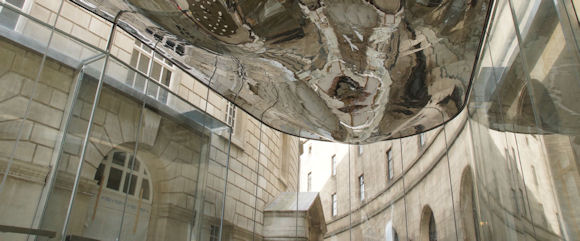
The glass link building between Manchester Central Library and the Town Hall Extension
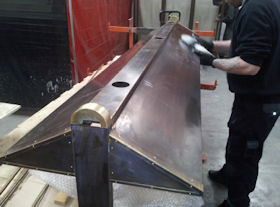
Patinated bronze gate leaf finished with a coat of wax
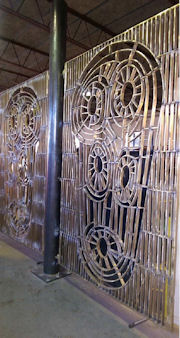
Bronze flats TiG welded together to form a gate leaf

Materials

Mount Street Bronze Gates, Manchester

As part of the redevelopment works to the centre of Manchester, the City Council created a new link building connecting the Central Library with the Town Hall Extension. This organically shaped glass structure, together with a new pair of bronze gates, closes off the area between the two Grade II* listed buildings, and the design of the gates picks up the outline profile of the link building.

Heritage Project Contracts was appointed by Laing O'Rourke to finalise the design details with Ian Simpson Architects and to fabricate two new pairs of bronze gates for Mount Street. The gates were formed from bronze flats, TiG welded together to form the gate leaves. Once fabricated, the leaves were patinated to give the desired finish colour before being protected with a coat of wax.
Works completed
February 2015
Main contractor
Laing O'Rourke
Materials

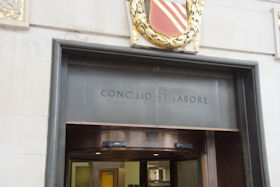
Scagliola Columns, Manchester Central Library

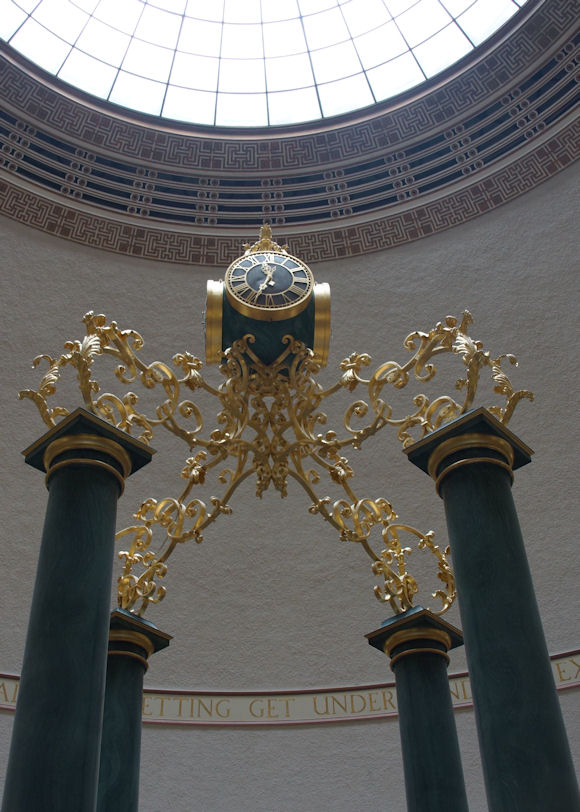
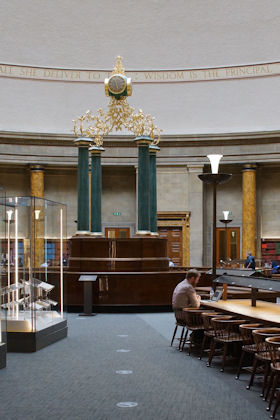
Manchester Central Library was built between 1930 and 1934 to a design by E Vincent Harris, in the form of a columned portico attached to a large rotunda with a domed roof, mimicking the architectural style of the Pantheon in Rome. It closed in 2010 for complete renovation. At its heart is a large circular reading room with a full height ceiling, where the architect designed an ornate gilded wrought iron structure that sits over the central counter, standing on four malachite coloured scagliola columns and topped by a four-sided clock. The building is listed Grade II*.

Heritage Project Contracts was appointed to carry out a number of conservation projects within the library, including works to the scagliola columns. These had surface damage and required localised repair. The surface of each was carefully flatted back before a pigmented gypsum filler was used to fill chips and scratches, and the columns were then finished with a number of coats of linseed oil. Scagliola is a composite of gypsum, glue and natural pigments mixed to imitate marble and other decorative stones, a technique that became fashionable in 17th century Tuscany as a cheaper substitute for expensive stonework.

Works completed
January 2015
Main contractor
Laing O'Rourke
Gilded ironwork, clock and scagliola columns beneath the library dome
Malachite coloured scagliola column after localised repair
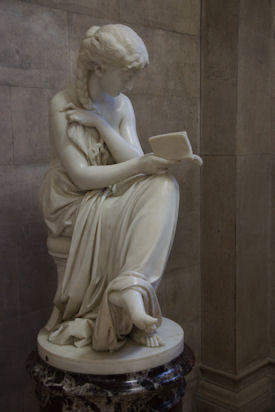
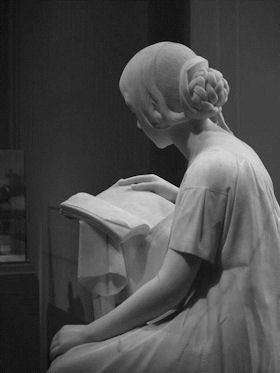
The white marble sculpture 'The Reading Girl' by Giovanni Ciniselli
The marble sculpture in Manchester Central Library
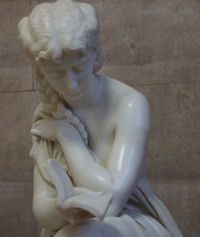
Delicate hand cleaning of the marble surface at the workshop

Materials

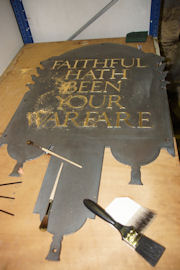
'The Reading Girl', Giovanni Ciniselli

Within Manchester Central Library is a white marble sculpture, 'The Reading Girl'. It was created by the Italian sculptor Giovanni Ciniselli (1832 to 1883) and bought from Italy by Daniel Adamson, the first chairman of the Manchester Ship Canal Company. It was given to the library by his family in 1938 when the building was opened.

As part of the Manchester Transformation Project undertaken by Laing O'Rourke, the statue was conserved by Heritage Project Contracts. It was transferred to our workshops for assessment and a much needed clean. A build-up of dust, dirt, nicotine and oily residues from handling had darkened the surface of the marble, most evident in the folds of her hair and cloak. After delicate cleaning by hand the original appearance of the marble was revealed. The marble revolving plinth was also cleaned and repaired before re-installation in the completed Shakespeare Hall.

Works completed
December 2013
Main contractor
Laing O'Rourke
Category

Contractors

We are happy to work with building contractors of all sizes to assist them in the redevelopment of heritage buildings and structures across the UK. We have worked with a number of construction companies on prestigious projects, undertaking high quality works sympathetic to the building fabric.

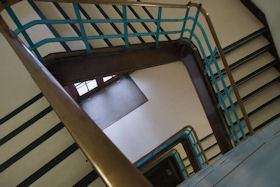
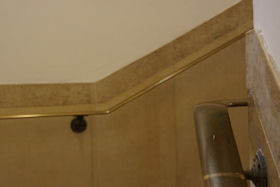
Replica cast brass handrail installed in Manchester Central Library
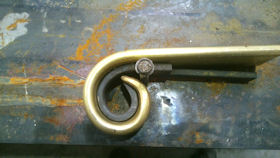
Brass handrail section produced from a metal die
Patinated replica wall bracket copied from a surviving original

Contractors

Manchester Library Handrails

The Grade II* Manchester Central Library building was designed by E Vincent Harris and, when completed in 1934, was one of the most significant buildings in Manchester. It was the subject of a four year Transformation programme of works, and Heritage Project Contracts was employed by Laing O'Rourke to undertake a number of specialist and innovative projects to improve the serviceability of the building while maintaining its character.
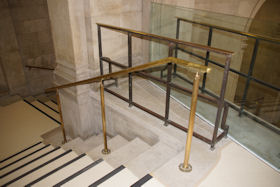
The works included the replication of hundreds of metres of new brass handrails to the stair cores and Shakespeare Hall. A metal die was made to allow the correct profile to be produced by casting. Replica wall brackets also had to be made by copying one of the surviving originals, and these too were patinated to give a dark brown colour.

Works completed
June 2014
Main contractor
Laing O'Rourke
Contractors

Harlaxton Manor, Grantham

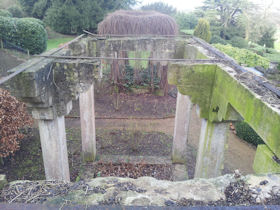
Harlaxton Manor is a unique style house built in the 1830s for a wealthy Nottinghamshire businessman, Gregory Gregory. A fusion of Jacobean, Baroque and Gothic styles in Harlaxton village outside Grantham, it was built by the architect Anthony Salvin and is today owned by the University of Evansville, Indiana, USA. The gardens were built as an integral feature of the manor house and include French-style terraces, a Dutch ornamental canal, an Italian Garden and English Landscape walks, designed by the architect William Burns.

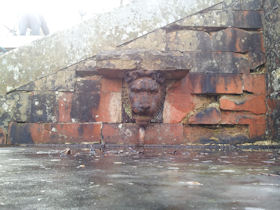
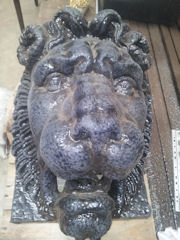
Heritage Project Contracts was employed by Skillingtons Workshop Ltd, a specialist building conservation company, to undertake repairs to the iron elements of the two pagodas in the Italian Garden and to the cast iron lion's head mask at an adjacent pool. The wrought iron straps stabilising the stone pagoda structures were carefully removed, cleaned of corrosion back to a sound metal surface, protected with a good quality paint system and, once the stonework had been repaired, re-leaded into their original locations.

The cast iron lion's head mask was carefully removed from the stonework above the water pool and transferred off site to our workshop. It was abrasive blast cleaned to remove old paint layers and corrosion back to a sound metal surface, then painted with a high quality three-coat system to provide long lasting protection, before being returned to site and refixed into the stonework of the pool.

Works completed
June 2014
Main contractor
Skillingtons Workshop
Ironwork of the Italian Garden pagodas at Harlaxton Manor
Wrought iron straps removed for cleaning and painting
The restored cast iron lion's head mask refixed above the pool
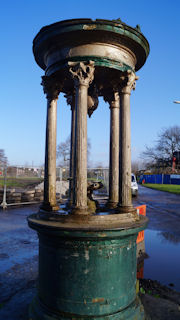
The restored cast iron drinking fountain re-erected in Alexandra Park
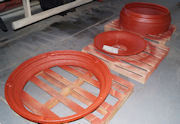
Dismantled fountain components at the workshop

Contractors

Alexandra Park, Manchester

Alexandra Park is a 60 acre park in the Moss Side area of Manchester, opened to the public in 1868. It is a Grade II listed landscape and was in receipt of a five million pound make over funded by the Heritage Lottery Fund and Manchester City Corporation, refurbishing community facilities and improving much of the landscape by re-instating its original historical features. Included was a cast iron drinking fountain cast by Andrew Handyside and Company at their Derby works, known as the Britannia Iron Works. It is one of only three known of this style to survive.

The fountain was in a poor state, the paint finish had failed and corrosion had taken hold, and a number of decorative elements were missing including the cast iron cherub to the roof. Heritage Project Contracts labelled and carefully dismantled the fountain, transferring the components to our workshop for restoration.

Each piece was abrasive blast cleaned to remove old paint layers and corrosion so the full extent of repair could be defined. Missing components, in particular the cherub and the capitols to the columns, were remade by copying pieces from an identical fountain in St Pancras Old Church Gardens, London. The cast domed roof had collapsed and was repaired using stitching and plating techniques. The cleaned and repaired components were repainted with a two-part paint system before the fountain was re-erected on site.

Works completed
September 2014
Main contractor
Balfour Beatty

Category

Specialist projects

Bespoke commissions where an element has to be replicated, reconstructed or conserved in place, from library furniture and lighting canopies to memorial gates, cast iron lamp posts and historic machinery.

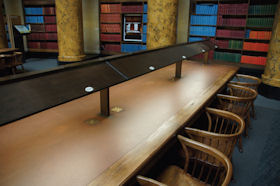
Walnut reading room desks with replica lighting canopies
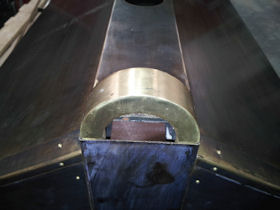
Brass and aluminium canopy under fabrication
Cleaned and French polished desk woodwork

Specialist projects

Manchester Library Reading Room Desks

The Grade II* Manchester Central Library building was designed by E Vincent Harris and, when completed in 1934, was one of the most significant buildings in Manchester. As part of its four year Transformation programme, Heritage Project Contracts was employed by Laing O'Rourke to undertake a number of specialist conservation projects, including the refurbishment of the original library reading room desks. The work involved cleaning and repairing the large 16 seat walnut desks and replicating new lighting canopies to restore the reading room to its original appearance.
Fourteen of the original 6 seat lighting canopies were missing. We manufactured new canopies to exactly replicate the originals from brass and aluminium sheeting, cut, folded and riveted around a steelwork frame with cast brass detailing applied. The canopies were then chemically patinated to replicate the original deep brown bronze finish.

The tables were cleaned to remove dirt, offensive graffiti marks and old surface coatings. Traditional linoleum tops were cleaned and refreshed, missing elements of the timber mouldings were replicated and fitted, and the cleaned woodwork was French polished and given a protective coating of wax.

Works completed
December 2013
Main contractor
Laing O'Rourke
Specialist projects

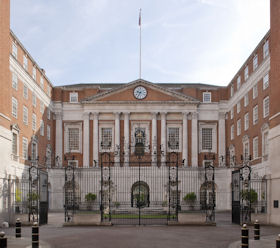
British Medical Association Memorial Entrance Gates

The British Medical Association sits on the original site of Tavistock House and grounds. After the demolition of the house in 1900, Sir Edwin Lutyens designed new buildings on the site, originally for the British Theosophical Society between 1911 and 1914. These unfinished buildings were acquired by the BMA in 1923 and Lutyens completed them to form new headquarters in 1925. He was also responsible for the design of the memorial garden and the Grade II listed Gates of Remembrance, erected in memory of the 574 members of the BMA who died in action during the First World War.

Heritage Project Contracts was appointed by the BMA to undertake necessary conservation of the gates in situ. They had previously been restored in 1995, however that work had not included full cleaning of the wrought iron tripartite finial elements, and through use the gates had become damaged and in need of treatment.

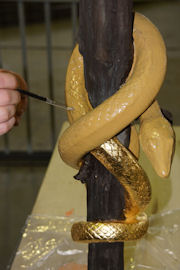
The works were undertaken while the building was in full occupation and it was important that disruption was minimised. We worked with the client to ensure event use, access and a safe working environment were maintained at all times. The memorial plaques at the centre of the overthrow, together with the serpent, were removed to a workshop for careful cleaning and re-gilding. The works were carried out to a very tight programme.

Works completed
August 2014
Client
British Medical Association
The Lutyens designed Gates of Remembrance at the British Medical Association
Wrought iron tripartite finial element of the memorial gates
Re-gilded memorial plaque and serpent at the centre of the overthrow
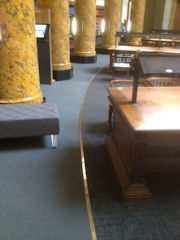
Patinated brass metalwork in Manchester Central Library
Bespoke floor expansion strip in the main reading room
Patinated brass conduit and door stop detail

Specialist projects

Manchester Central Library Specialist Metalwork

As part of the four year Transformation programme at the Grade II* Manchester Central Library, Heritage Project Contracts was employed by Laing O'Rourke to undertake a number of specialist and innovative projects to improve the serviceability of the building while maintaining its character.
The works included the replication of new handrails to Shakespeare Hall, bespoke floor expansion strips for the floor of the main reading room, patinated brass conduits, door stops and media screen supports. Each element was individually designed and fabricated before being chemically patinated to give a deep bronze patina. Where possible we used salvaged brass material taken from the building in the new items, ensuring maximum retention of original materials.

Works completed
June 2014
Main contractor
Laing O'Rourke
Specialist projects

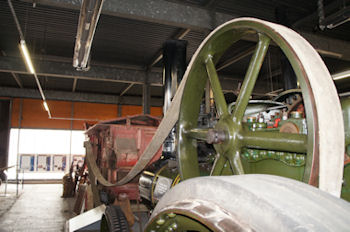
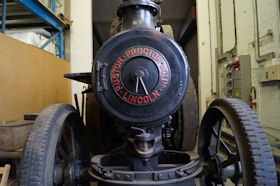
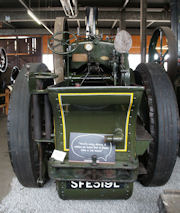
'Sylvie' Engine, Museum of Lincolnshire Life

The Museum of Lincolnshire Life houses an extensive collection of industrial and agricultural artefacts from the area, including 'Sylvie', a Ruston Proctor engine. The engine was for many years used by volunteers to attract visitors to the museum, but in recent years it could not be steamed due to thinning of the original boiler ironwork. A fund was established for her repair, in part because of the extent of original material, which is rare in a working engine. A conservation approach was followed to conserve and display the engine as a static exhibit within the gallery, preserving her for future generations.

Heritage Project Contracts was employed to undertake this sensitive conservation work, preparing 'Sylvie' for display. She was carefully cleaned to remove contaminated grease, dirt layers and corrosion, and the surfaces were then protected with a Carnauba wax and synthetic grease coating. The engine was returned to an improved interpretation display area where it was connected with a drive belt to one of the museum's threshing machines, with loose components including boiler side covers, fire bars and fireman's tools displayed separately alongside.

Works completed
June 2013
Client
Lincolnshire County Council
The Ruston Proctor engine 'Sylvie' on display at the museum
Engine surfaces cleaned of contaminated grease and corrosion
Detail of the conserved engine components
Restored cast iron lamp post outside Manchester's Old Town Hall
Replica copper lantern head fitted with modern LED lighting

Specialist projects

Manchester City Lamp Posts

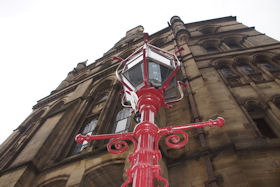
The Grade I listed Old Town Hall building in Manchester was constructed in 1877 and was originally lit externally by cast iron lamp posts with gas-lit lanterns. Over time most had been damaged and replaced with modern electrical fittings. As part of the works to the Town Hall Extension, the last remaining seven lamp posts, two of which had recently been damaged in collisions with motor vehicles, required full refurbishment.

Heritage Project Contracts undertook an initial survey of the cast iron posts and the modern lighting heads and developed a programme of work for the refurbishment. This included a Listed Building Consent application for approval of the new replica lighting heads with the planning authority and English Heritage.

Following approval the posts were removed and taken to our specialist workshops in Shropshire for assessment and repair. Paint analysis revealed that the columns had been repainted a total of 22 times in varying colours, only recently in their current black; the original paint system was a burnt red colour and this was chosen for re-instatement. Existing coatings were removed by careful abrasive cleaning to identify damage, fractures and missing elements, and for severely damaged posts an internal armature was fitted to provide additional support. Based on archive photographs the original gas-lit heads were replicated in copper, fitted with modern LED lighting and patinated to a deep bronze colour. Installation was carried out in conjunction with the contract works to re-pave the area.

Works completed
October 2013
Main contractor
Laing O'Rourke
Specialist projects

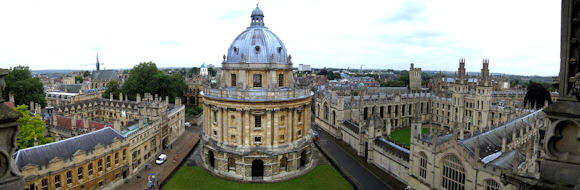
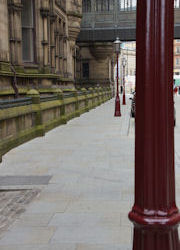
The Radcliffe Camera, Oxford

The Radcliffe Camera is named after John Radcliffe (1650 to 1714), who funded its construction through a bequest. It was designed by James Gibbs in a neo-classical style to house the Radcliffe Science Library, built between 1737 and 1749, and is now part of Oxford University, used as a reading room for the Bodleian Library. The building is listed Grade I.

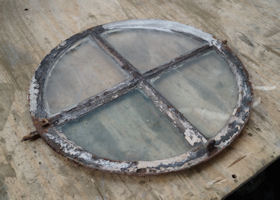
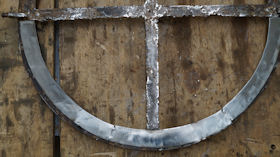
Heritage Project Contracts was appointed by the Oxford University Estates Directorate to undertake trial cleaning and repair works to two large timber windows and one small circular iron window. The latter was in poor condition due to heavy corrosion and required careful reconstruction with new metal sections. The trial works allowed the client to gauge the level of repairs required to the Radcliffe Camera windows, with the intention that any further works will be of minimal intervention.
Works completed
October 2013
Client
Oxford University Estates Directorate
The Grade I listed Radcliffe Camera in Oxford
Trial cleaning and repair to a large timber window
Circular iron window reconstructed with new metal sections

Category

Conservation

The conservation of historic materials is a key service. We work in partnership with a number of PACR Accredited conservators, and our employees are skilled in a wide range of traditional craft skills. As well as applying practical conservation treatment techniques we carry out condition assessments, prepare treatment specifications and provide guidance on costings, allowing a client to fully understand their objects' requirements and the likely costs. We are pleased to work with museums and galleries across the UK, helping to care for the collections in their charge.

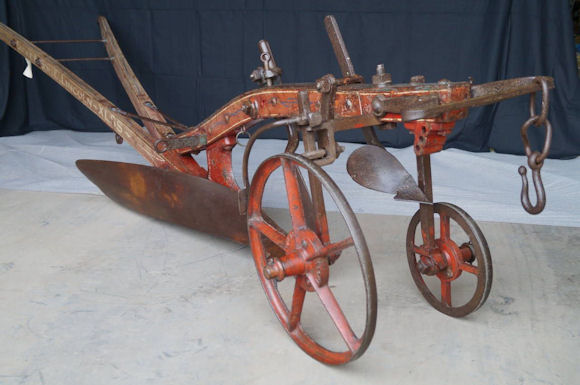
A horse drawn Cooke plough in the collection of the Lincolnshire Museum of Rural Life
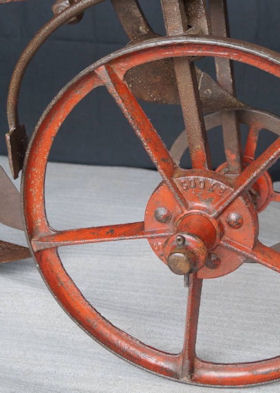
Detail of the plough after cleaning, with original paint layers preserved

Conservation

Cooke Plough, Lincolnshire Museum of Rural Life

John Cooke and Son were noted manufacturers of horse drawn ploughs based in Lincoln. The Lincolnshire Museum of Rural Life holds a number of ploughs attributed to Cooke in its collection. The museum is based in the listed former barracks built for the Royal North Lincoln Militia and houses a comprehensive social history collection celebrating the culture of Lincolnshire since 1750.

Heritage Project Contracts was appointed by the museum to undertake the careful cleaning and conservation of this locally important plough, which had survived in an original, unrestored condition. It was cleaned to remove loose corrosion layers back to a sound surface, preserving all the original surviving paint layers, before being protected with a layer of microcrystalline wax. It was then returned to the museum for display.

Works completed
February 2015
Client
Museum of Rural Life

Have a heritage element on your project?

Tell us what you are dealing with and we will let you know how we can help, from an initial investigation through to works on site.